







Many publications explain how to use a specific herb for a specific problem. Some even offer ready‑made recipes with herbal blends.
But how do you go further?
How do you create your own therapeutic formula based on your needs, the effects you’re looking for, and the plants you actually have on hand? If you’re interested in customizing your own formula, this article is for you.
The proposed methodology is not new, I believe the first version of it was offered by Bone, K. and Mills, H. #ref:145#. I’ve seen this methodology taken up with a few adaptations by several herbalists, including the renowned Aviva Romm #ref:122#. I offer here my version, adapted to modern tools for more complete and faster searches.
Here are the steps for a customized formulation:
- Identify desired properties
- Setting priorities
- Identify potentially useful herbs based on their properties
- Select the herbs for the formula
- Define formula and dosage, and adjust dosages
Identify the properties required for your therapeutic formula
There are many angles you can explore to find all the properties you’re looking for. Here, I detail those I consider most useful. In my opinion, it’s a good idea to use as many methods as possible, so as to look at the problem from all angles and not forget anything.
If a diagnosis is available, look for plant properties related to the problem.
Some problems have clear causes, and herbal books list the properties that can help. Tisanji goes further by offering “problem cards” linked to each property in the lexicon. With them, you can see which problems a property treats and discover other properties that are often helpful too.
Understanding the action of a plant on a problem allows you to adapt plants to your specific needs. It also gives you more scope to replace a plant you don’t have in your inventory with another that has the same property(ies).

Use the platform to find useful properties related to an issue
tisanji offers a wide range of issue cards; simply enter the issue in the search field in the article section. You can also use the article search tool to identify articles that deal with an issue.

Issues: Wounds and healing
For small wounds, astringent plants ( which are also hemostatic, anti-inflammatory and antiseptic) are a winning combo. Other specialists can be added as required:
– Healing / vulnerary: accelerate healing;
– Analgesic / antalgic / antipruritic: reduce pain and itching;
– Antiseptic / antibacterial: disinfect wounds;
– Hemostatics: stop blood flow.
– Antioedematous: useful for bruises
Here, plants are mainly used externally… They can be used as poultices, ointments or simply poured over the wound.
Plants for external use: Yarrow(Achillea millefolium), Calendula(Calendula officinalis), Comfrey(Symphytum officinalis), Witch Hazel(Hamamelis virginiana), Lavender(Lavandula angustifolia), St. John’s Wort(Hypericum perforatum).
Search for perceived causes
As the body is incredibly complex, it’s important not to limit ourselves to the first causes, which could be merely symptoms of more important causes. This doesn’t mean we should ignore them. Trying to identify as many symptoms as possible with their causal links is often very useful.
Here’s an example:
A person experiences long-term stress. This stress causes insomnia, which in turn lowers the person’s energy and reduces immune system activity, making him or her susceptible to a viral infection that has forced the lungs to increase and densify the mucus that causes coughing. #ref:145#
Sometimes, several symptoms have a single cause.
For example, a thyroid gland imbalance may lead to one or more of the following symptoms:
- Chronic fatigue
- Weight gain
- Cold sensitivity
- Abnormally slow heart rate
- Dry skin
- Depression
- Memory impairment
- High cholesterol
- Muscle cramps
- Constipation, bloating or even diarrhea…
It’s all very well to act on the symptoms, for example by applying cream to dry skin, but as long as the thyroid, through its imbalance, dries out the skin, the relief will be temporary. Naturally, associating such different causes with a thyroid problem is not easy (hence the importance of a proper diagnosis and the advice of a doctor), but very useful in defining an effective treatment. Once the cause has been identified, it’s simply a matter of controlling the gland to solve all the problems, but it’s also possible to dig deeper into the problem by asking what’s causing the gland’s dysfunction, thus defining the predisposing causes and reducing the likelihood of recurrence.
Types of causes
The example in the blue box distinguishes between the following types of causes:
- Causes of “predisposition”: stress, diet, low immunity. Here, long-term solutions often require a change in lifestyle.
- “Excitatory” causes: viral infection, accident, in short, an event that has made the problem a reality.
- Causes of condition “maintenance”: mucus, cough (which can prevent sleep)
Of course, some causes can be treated with herbs, while others cannot. For example, heredity, emotional trauma, age or lifestyle are all real causes, for which you need to look for tools other than herbs. And sometimes, you just have to live with it.
Identify as many causes as possible
Establishing the causes is the cornerstone of the treatment to be chosen. That’s why you want to take the time to make sure you haven’t missed any. Don’t get lost in semantics: it’s not important to identify the type of cause, or even whether it’s a symptom or a cause… The types of cause are given here to help you identify all the aspects on which you want to see improvements.
The specificity of the person for whom the therapeutic formula is intended
Sometimes, the same problem can lead to very different strategies depending on the context; take the time to check these aspects to see if they can influence the solution or the problem.
- Disease history
- Personal environment
- Lifestyle
- Patient’s current condition
- Existence of other serious problems (present or past)
- Current medication
- …
Is the formula’s approach balanced between support and compensation?
Physiological support
Since you’re reading this blog, you’re probably looking for herbal treatments for their reputation for treating health problems by toning up the body and affected systems (known as a physiological support approach). For example, in the case of flu-like symptoms (fever, fatigue, headaches), we’ll support the fever, encourage rest and stimulate the immune system. These are practices that take longer to take effect than simply taking pills to stop the pain and fever, and antibiotics to kill the invaders instead of the immune system, put to rest with these unpleasant symptoms.
It’s a rather caricatural example, but one that expresses the need for common sense… Don’t wait until you lose consciousness to stop supporting the fever and consult a doctor.
The strategies employed by this approach (non-exhaustive list)
- Improving nutrition and lifestyle habits
- Detoxification (use of depurative and hepatic plants)
- Elimination ( diuretic, diaphoretic, lymphatic, laxative, expectorant plants)
- Increase vitality (use of general or specific tonics, adaptogens or immunostimulants)
Physiological compensation treatment
The first approach can often be complemented by certain physiological compensatory treatments. In other words, plants are used to reduce symptoms or lighten the load on certain organs. In fact, in the natural pharmacopoeia, there are many analgesic, antibacterial, antiviral or anti-inflammatory plants (the list of anti-something properties is long). This strategy is useful, if not necessary, in the following cases:
- A function is overstimulated or deficient
- Pathologies lead us into a vicious circle that we want to stop or slow down.
| Cause | Type of cause | System | Property | Strategy |
|---|---|---|---|---|
| Stress | Predisposition | Nervous | Adaptogen | Support |
| Insomnia | Predisposition | Nervous | Sedative | Compensation |
| Predisposition | Tonic | Support | ||
| Adaptogen | Support | |||
| Depressed immune system | Predisposition | Immune | Immunostimulant | Support |
| Viral infection | Excitatory | Immune | Antiviral | Compensation |
| Glaire | Maintain | Respiratory | Anticatarrhal | Compensation |
| Mucolytic | Compensation | |||
| Cough | Maintain | Respiratory | Pectoral | Support |
| Expectorant | Support | |||
| Bechic (antitussive) | Compensation |
Prioritizing your treatment formula
Once we have a good picture of the treatable causes, all we need to do is define a strategy and set priorities.
Possible strategies
There may be several possible strategies. One might want to treat the predisposing causes first, in the hope that once these are removed, the body will find its own ability to overcome the excitatory and condition-maintaining causes.
Personally, I start by breaking the vicious circles. If the person is suffering, I try to give them a bit of relief first. This small respite helps them trust the therapeutic process. When the underlying causes have been present for a long time, the solutions often take longer to show results.
Is it necessary to prioritize?
While it’s not always necessary to prioritize, it is often recommended. Prioritizing actions allows us to focus our efforts, to have reference points for long-term work and, above all, to formulate with a reasonable number of plants.
When we opt for a strategy in more than one stage, it allows us to take stock, re-evaluate, prioritize and adapt the strategy between each stage. What causes are still present? Were the herbs and dosages effective? How does the person taking the herbs feel? Sometimes, when priority problems are treated, they also solve secondary problems. Other times, improvements bring new problems to the fore. Doing things in stages is ideal when there are many seemingly unrelated causes.
So, we simply list the causes in order of priority and, for the most important ones, we list the plant properties that can help, as well as the systems to support.
In our case (the blue box), all the causes are related, but I’ve distinguished the priority properties from the others.
| Property | Priority |
|---|---|
| Adaptogen | Non-priority |
| Sedative | Non-priority |
| General tonic | Non-priority |
| Adaptogen | Non-priority |
| Immunostimulant | Priority |
| Antiviral | Priority |
| Anticatarrhal | Priority |
| Mucolytic | Priority |
| Pectoral | Priority |
| Expectorant | Priority |
| Bechic (Antitussive) | Priority |
Identify potentially useful herbs based on their properties
The ideal plants are those with the maximum number of desired properties.
Here, the plant cards and the tisanji platform are really useful for associating plants with several properties. Create a filter with the properties you’re looking for. Tisanji will instantly show all the plants that match at least one of them. Those with the most matching properties rise to the top of the list.
Use the filters in the tisanji plant cards to find the best plants for the properties you are looking for.
You can search for medicinal uses and properties. tisanji will give you a list of suitable plants, ordered according to the relevance of your search criteria. Here, for example, I’ve placed the 10 properties sought in the example.

Once the plants have been filtered, go to the complete card and select the “Use” tab to find out about dosages, precautions, preferred systems and see if there are any notes relating to the various properties.
See thyme(Thymus spp.) plant page
Each new property you add expands the list of suggested plants. Tisanji includes all plants that match at least one of your criteria. With 10 properties, the tool returns 264 results. And just like on Google, the most useful matches tend to show up in the first few pages.
When trying out a new herbal formula, limit the number of new plants.
This way, if you have an allergic reaction or unpleasant side effects, it will be easier to find the culprit plant, or if the effects are too strong, you won’t have to put aside too many plants. Personally, I try to limit each formula to 5 plants. Of course, this is not an absolute rule. L’Herbothèque #ref:146# talks about a maximum of between 3 and 9 plants. I’ve seen great herbalists use up to 15 plants in a formula, but then many were simply nutritive.
Avoid overloading a formula with plants with similar actions
We can use two, sometimes three plants that have a highly sought-after property for a particular problem; ideally, these plants will have other properties that are complementary, or different active ingredients (operating modes of the property). This is to ensure an effect on the symptom whose primary cause is unknown.
Don’t go overboard with this strategy, which often betrays a lack of experience. Overloading a formula usually makes it less effective, too complex for the metabolism. What’s more, when your complex formula works, you don’t know which element is working, and you’re doomed to use and stock more herbs than you need.
Select the plants for your formula
Now that we’ve prioritized the properties we’re looking for, we’ve identified 264 plants with at least one of the properties we’re looking for. I make a small table with the first plants proposed by tisanji. Then, I give 2 pts per star to the priority properties and 1 point per star for the others.
| Propriétés | Elecampane (Inula helenium L.) | Thyme (Thymus spp.) | Black Spruce (Picea mariana) | European Elder (Sambucus nigra L.) | Ashwagandha (Withania somnifera (L.) Dun..) | Coneflowers (Echinacea spp.) |
|---|---|---|---|---|---|---|
| Total points | 39 | 30 | 30 | 28 | 15 | 10 |
| Immunostimulant (x2) | ⭐⭐ | ⭐⭐ | ⭐⭐ | ⭐⭐ | ⭐⭐ | ⭐⭐⭐ |
| Antiviral (x2) | ⭐⭐ | ⭐⭐ | ⭐⭐⭐ | ⭐ | ⭐⭐ | |
| Anticatarrhal (x2) | ⭐⭐ | ⭐⭐ | ⭐⭐ | |||
| Mucolytic (x2) | ⭐⭐ | ⭐⭐ | ⭐⭐ | ⭐⭐ | ||
| Pectoral (x2) | ⭐⭐⭐ | ⭐⭐ | ⭐⭐⭐ | ⭐⭐ | ⭐ | |
| Expectorant (x2) | ⭐⭐⭐ | ⭐⭐ | ⭐⭐⭐ | ⭐⭐ | ||
| Béchic (x2) | ⭐⭐⭐ | ⭐⭐ | ⭐⭐⭐ | |||
| Adaptogen | ⭐⭐ | |||||
| Sédative | ⭐⭐ | ⭐⭐ | ⭐⭐ | |||
| Tonic | ⭐⭐⭐ | ⭐⭐ | ⭐⭐ | ⭐⭐ | ⭐⭐⭐ |
I make sure that priority properties are well covered. Ideally, we’ll often look for 2 plants and/or a specialist plant. In the plant cards, specialist plants for a property have three stars (⭐⭐⭐).
In our case, we could well have added many plants to the following table. However, elecampane is a great pectoral plant that tones the lungs, soothes coughs and reduces mucus. I use the plant frequently and have every confidence in it. I don’t think it’s necessary, but it would have been just as good to double its properties with those of thyme or black spruce.
After elecampane, I’d like to reinforce the immunostimulant and antiviral aspects; I note that adaptogenic and tonic properties, although not a priority, are lacking in elecampane. At first glance, one might have been tempted to choose astragalus, but the restrictions on the plant card state that it is not indicated for the acute phase of an illness. So, for the immunostimulant part, I choose echinacea, because I know the formidable duo of elecampane and echinacea… and what’s more, it’s an antiviral. I could stop here and have a two-herb formula until the virus is eliminated, and then come back at a later stage to attack the predisposing causes to prevent the problem from recurring.
However, as I only have 2 plants, I can add a 3rd: why not aschwagandha, an adaptogen, tonic and calming… our patient will sleep better and have more strength to fight the virus.
Predisposing factors and lifestyle
Predisposing factors often come from lifestyle habits. If a person only boosts their stress resistance with adaptogens, they may get temporary relief. Once they feel better, they might accept more stress and extra burdens. And before long, they’re back where they started
Predisposing causes generally require lifestyle changes for long-term improvement.
Other selection criteria
Here are some other criteria that influence my choice:
- Allergy or possibility of allergy (if the person has an allergy to a plant in the same family, I usually prefer another plant unless they have good experience of the plant in question). In our example, if the person for whom the formula is intended is allergic to other Asteraceae, I would change my choices, as elecampane and echinacea belong to this family, which sometimes causes problems.
- Plant availability (do I have it in my garden, in my pharmacy, do I know where to buy it?)
- Personal preference, or that of the person who will be consuming the plant. I think it’s good to encourage affinity. I’ve always felt that the medicines you like to take are the ones that work best. Likewise, every herbalist ends up with his or her preferred plants. As you may have guessed, elecampane is a must for me (I even make sweets from it).
Check my plant selection
Before finalizing my choice of plants, I open the plant files for each selected plant:
- Elecampane(Inula helenium L.)
- Echinacea purpurea (Echinacea purpurea (L.) Moench)
- Ashwagandha(Withania somnifera (L.) Dun.))
In particular, I’m looking at :
- Systems of choice
- Restrictions, precautions and drug interactions
- Recommended transformations
I realize that all 3 plants lend themselves to decoctions and alcohol-based concentrates. So, a priori the following choices are open to us: a decoction, a syrup (which is a form of decoction), an alcohol-based concentrate (tincture). Here, it’s really a question of preference for the person who’s going to use the plants, and of availability.
Drinking a hot decoction can do a lot of good to reduce stress, help sleep, support fever and sweat and slow down a bit. On the other hand, it takes time and is of no use if the person doesn’t take the decoction assiduously.
Giving 3 liquid concentrates in dropper bottles or mixing them to the desired proportion and blending is certainly the quickest way… provided you have these tinctures on hand.
If you’ve just got the 3 dried roots and someone who wants a quick fix, well, the syrup option is perfect.
Combine herbs and adjust dosages in your therapeutic formula

To find out the correct dosage, simply consult the plant cards.
I’ve put the example of elecampane on the right. Echinacea and ashwagandha have similar instructions.
In the case of syrup preparation, we use the information from the decoction and the conversion tables issued in the article“Creating a customized syrup“.
My dosage is 2 tablespoons. The frequency is the same as for the decoction (3 times a day) , since my syrup will contain a similar number of active ingredients to the decoction.
As the plant sheets indicate 4g/cup for echinacea and elecampane and 2g/cup for aschwaganda, I choose a reduction factor of 5 , which is in the green zone for all my plants.

See article: Create a customized syrup for full instructions
Still based on the table above, I know the quantities needed for my syrup.
- 3 litres of water
- 75g echinacea
- 75g elecampane
- 37g ashwagandha
- 1.08 litres of honey or sugar, to be added after the decoction has reduced in volume by 5 and the roots have been filtered – 3 litres / 5 (reduction factor) X 1.8 (concentration required for a “room temp” syrup)
All that remains is to sanitize the bottle of syrup and label it with all the ingredients and dosage.
Note: as the syrup is made for immediate use, it doesn’t need to be kept at room temperature for long. You could reduce the amount of sugar and store it in the refrigerator. See the article on syrup making for more details.

Always start using new plants at a low dosage
Every human being is different, so don’t take it for granted that you’ll react like most users to a plant. Start at a low dosage, listen to yourself, and if the reaction is positive or absent, gradually increase to the recommended dosage.
In our case, we could start with 1 tablespoon, 3 times a day for the first 2 or 3 days. Take a second dose only if there are no aggravating side effects. And if after 2 days (6 doses) there are no signs of allergy or aggravating side effects, switch to 2 tablespoons, 3 times a day.
For long-term treatments, allow for breaks
If treatment lasts longer than 3 weeks, plan for breaks. Generally speaking, this means one day a week, one week a month and one month a year. Of course, there are some plants where the indications are more precise, and others where long-term treatment is simply forbidden (often because of the low toxicity that can accumulate).
Inspirational books for this article
Principles and Practice of Phytotherapy – Modern Herbal Medicine#ref:145#.

This great book, rather technical, is a mainstay of herbalism. With their practical, science-based approach, the authors explore with us the major families of active ingredients, the principles of herbal treatments, dosages, patient adaptations, and present several monographs, etc. The inspiration for the proposed methodology comes from this book (chapter 7).
Books that list plants by property
If you prefer paper books to technological tools, here are a few books you might find useful.
| Livres | Plants by properties | Properties by issues | Plants by problems |
|---|---|---|---|
Medical Herbalism - The Science and Practice of Herbal Medicine #ref:44# | ✔ | ✔ | ✔ |
Le guide de la phytothérapie au quotidien #ref:20# | ✔ | ✔ (parfois) | ✔ |
Plantes médicinales indigènes #ref:113# | ✔ | ✔ | |
Traité pratique de phytothérapie #ref:25# | ✔ | ✔ | |
Botanical Medicine for Women's Health #ref:122# | ✔ | ✔ | ✔ |
La phytothérapie - se soigner par les plantes #ref:9#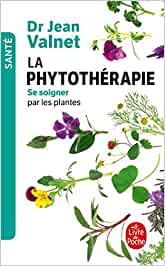 | ✔ | ✔ |
Warning
In the case of serious disorders or chronic illnesses, consult a doctor.
Self-diagnosis and self-medication are dangerous.
Unless specifically indicated, the uses described are for plants and do not apply to essential oils.
Before consuming a plant: make sure you identify it correctly, and always read the “Precautions and interactions with medicines” leaflet in the associated plant files.
Dosages are given for guidance only and are suitable for adults unless otherwise specified.
Despite all the care taken in writing this article, an error may have crept in. We cannot be held responsible for any consequences or misinterpretation, as no article can replace medical advice. For more information on the safe use of plants, read: Safe use of plants as allies in your health.