






When we think of herbal teas, we often picture jars full of dried herbs waiting for us all winter long. Yet all it takes is a few minutes in the garden to make an equally delicious infusion with freshly picked herbs.
I have to admit that this is often my favorite way to enjoy them. The aromas are brighter, greener, and sometimes a little more subtle, too. Every cup literally tastes like the garden.
Plus, it’s a great way to make use of plants that sometimes grow a little too abundantly. If your mint plant is threatening to take over the flower bed or your lemon balm is starting to get out of hand, here’s a good excuse to harvest a few sprigs!
The Great Classics
Mint
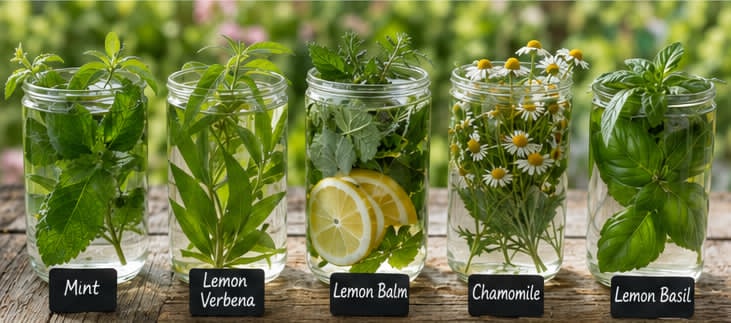
You can’t talk about fresh herbal teas without starting with mint! Its refreshing taste appeals to almost everyone, and it pairs well with many other garden herbs.
Try it with a few slices of lemon or some fresh raspberries right in the cup.
Lemon Balm
With its delicious lemony aroma, lemon balm makes for a very mild herbal tea. It’s perfect on its own, but also pairs very well with mint, linden blossoms, or a few rose petals.
Lemon Verbena
Lemon verbena probably has one of the most intense fragrances in the garden. Just a few leaves are enough to flavor an entire teapot. Its lemony flavor is much rounder than that of a lemon itself.
Chamomile
If you grow chamomile, feel free to use the freshly bloomed flowers. Their scent is slightly fruitier than that of dried flowers.
The Forgotten Plants of the Vegetable Garden
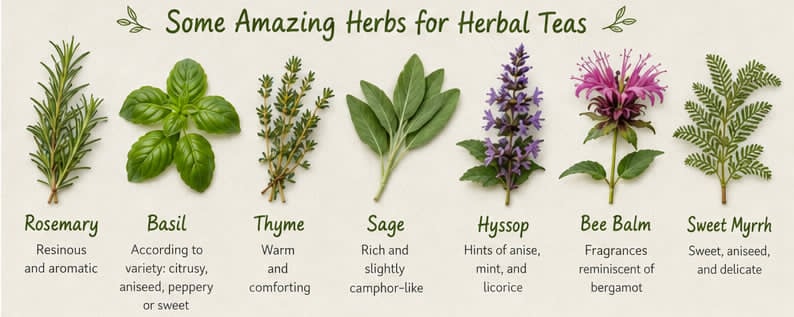
Some herbs are used almost exclusively in cooking… even though they also make excellent herbal teas.
Basil
Depending on the variety, basil can have peppery, lemony, anise-like, or even slightly spicy notes. Lemon basil is particularly pleasant as a herbal tea on hot days.
Rosemary
Rosemary makes a surprisingly fragrant herbal tea. Its resinous flavor is somewhat reminiscent of walks through a Mediterranean forest. A few sprigs are enough; it’s best to avoid using too much, as its aroma is strong.
Thyme
Thyme makes for a warm and very aromatic herbal tea that’s especially nice on cool days. A spoonful of honey perfectly complements its flavors.
Sage
Sage makes for a rich herbal tea with a slight camphor-like flavor. Because its flavor is quite strong, many people prefer to mix it with lemon balm or mint.
A Few Discoveries in the Garden
Agastache
With its notes of anise, licorice, and mint, agastache produces one of the most fragrant herbal teas from the garden. If you’ve never tried it, it’s definitely worth a spot in your next flower bed.
Monarda
Depending on the cultivar, monarda is reminiscent of Earl Grey tea thanks to its bergamot-like aromas. A wonderful discovery for black tea lovers looking to try something new.
Fragrant Myrrh
Still relatively unknown, fragrant myrrh has a mild flavor slightly reminiscent of anise and fennel. Its finely cut leaves add a touch of elegance to blends.
Lavender
Just a few flowers are enough to completely transform a herbal tea. The secret is to use them sparingly: lavender is delicious… but it can easily overpower the rest!
Why not add some fruit?
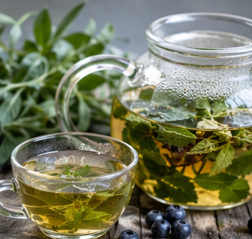
Fresh herbal teas taste even better when you add a few ingredients picked from the garden.
Try, for example:
- A few fresh raspberries;
- Blueberries;
- One or two sliced strawberries ;
- Apple slices;
- A few red currants or black currants;
- A slice of lemon.
Not only are these toppings delicious, but they also make the cup look beautiful.

Fresh herbs or dried herbs?
Here’s a simple analogy to help you understand what changes when a plant is dried. Imagine each cell in a plant as a small balloon filled with water. When the plant is fresh, these balloons are full and taut: the aromas and flavors are locked inside. But once the plant is dried, the balloons crack and deflate: the cell walls become porous, allowing the aromatic molecules to escape more easily.
Both have their advantages.
So, the dried plant releases its aromas more quickly and easily. The problem is that it may have already released some of those aromas during the drying or storage process.
Fresh herbs are more complete and often have more delicate, complex aromas, but they require longer steeping times to extract the aromas from their less porous cells. Therefore, dried herbs should be steeped for 7 to 12 minutes, and fresh herbs for 10 to 20 minutes, depending on the species and the desired intensity.
Since they contain a lot of water, you generally need to use two to three times as much fresh plant material (by weight) as dried plant material to make an infusion of the same strength. A good rule of thumb is to fill your cup (or teapot) one-quarter to one-third full with leaves and flowers before pouring in the simmering water.

To find out the optimal steeping time and the medicinal properties of these herbal teas, see the section on “How to Use the Plant Profiles” in the article.
A few tips for getting the most out of your herbal teas
- Pick your plants in the morning, once the dew has evaporated. That’s often when their fragrance is at its strongest.
- Rinse them quickly under cold water only if necessary, then drain them thoroughly.
- Gently crumple the dried leaves between your fingers or tear the fresh leaves into small pieces before placing them in the cup. This helps release the aromas and active compounds more quickly.
- Use simmering water rather than boiling water, especially for highly aromatic herbs or delicate flowers. Water at around 70 to 85 °C generally helps preserve their aromas better.
- Always cover an aromatic infusion and wait until it has cooled enough for the steam to condense on the lid. Essential oils are among the most aromatic and potent, but also the most volatile; this practice limits the amount that will evaporate into the air.
Turn Your Herbal Teas into Iced Teas and Lemonades
Once your tea is brewed, let it cool and serve it over ice.
To make lemonade, add a little lemon juice and sugar (to taste).
My best advice: experiment
In the end, that might be the best advice I can give you: don’t hesitate to experiment. If a plant is edible and already growing in your garden, brew yourself a small cup of it. You might discover, just like I did, your next favorite herbal tea where you least expected it.
To find out if your plant is edible, open the plant profile under the “Uses” tab. We’ll tell you its edibility and the optimal steeping time for each part of the plant. We’ll even give you some herbal tea recipe ideas.
If you’ve created an inventory of the plants in your garden, we’ll even send you email reminders about the best plants to harvest right now in your garden.
The joy of harvesting based on inspiration and the season
What I love most about fresh herbal teas is that they require no planning. You just go out into the garden and pick whatever takes your fancy. Not everything in the garden blooms at the same time! I often follow the bees—they show me which flowers are at their peak. Or I’ll put together a blend based on the inspiration of the moment, and a few minutes later, I’m enjoying a cup that’s probably unlike any other.
Maybe that’s it, after all—the best way to enjoy your garden: letting it surprise you, one cup of tea at a time.