





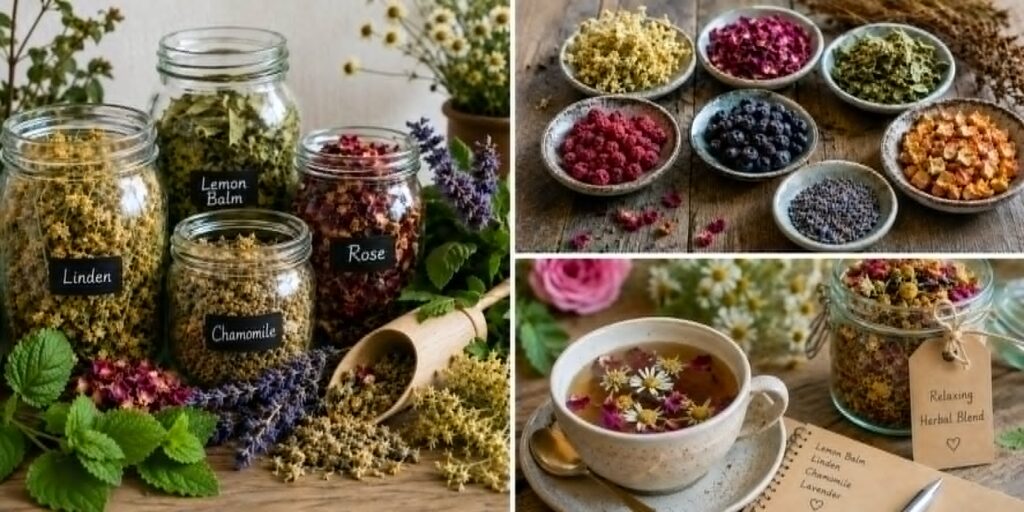
In the summer, we pick armfuls of mint, lemon balm, linden blossoms, chamomile, and even a few rose petals. We dry them carefully, then store them in pretty jars, promising ourselves we’ll enjoy them all winter long. A few months later, we open the cupboard… and realize we’re still making the same old mint tea!
Yet the possibilities are almost endless. By mixing a few herbs from the garden, dried fruits, and—occasionally—a few ingredients you already have in the kitchen, it’s easy to create original, fragrant herbal teas perfect for any occasion.
The best part? These blends can be prepared in advance, stored for several months in an airtight container, and make wonderful gifts for gardeners or herbal tea enthusiasts.
The secret to a successful blend
There’s no one-size-fits-all recipe. The best herbal teas are often the ones you tailor to your own tastes and what’s growing in your garden. A good way to start is to choose a star ingredient, then add a few companions to complement its flavor.
In most cases, the main plant makes up about one-third to one-half of the blend. Then add one or two plants that bring floral, citrus, or spicy notes, followed by a final touch: a few dried fruits, rose petals, or even a pinch of lavender.
Feel free to taste, adjust the proportions, and take notes. Some of the best recipes come about simply from a little curiosity!
For a relaxing herbal blend
- 4 parts lemon balm
- 3 parts linden blossoms
- 2 parts chamomile
- 1 part lavender
A delicate blend with floral and slightly lemony notes, perfect for ending the day on a gentle note. A spoonful of honey adds a lovely roundness to the flavors.
Fragrant Garden
- 3 parts mint
- 2 parts rose petals
- 2 parts lemon balm
- 1 part lavender
A fresh, fragrant herbal tea that’s just as delicious served hot as it is over ice on summer days.
The Orchard in a Cup
- 3 parts apples (dried fruit)
- 2 parts raspberries (dried fruit)
- 2 parts blueberries (dried fruit)
- 2 parts lemon balm
- 1 part rose petals
The fruit adds a natural sweetness reminiscent of late-summer harvests. If you prefer a slightly richer herbal tea, simply add a splash of maple syrup just before serving.

Not all roses are created equal when it comes to herbal teas
Rose blossoms have different scents
Many modern cultivars have almost no scent. Scentless flowers attract fewer insects (and pollinators) and are believed to be more disease-resistant.
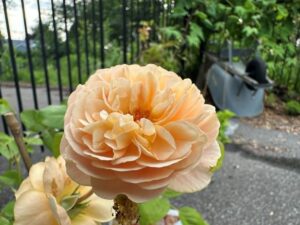
Some have a scent with distinct citrus notes (due to the essential oils limonene and citral).
If you’re looking for the classic scent of roses, Damask roses are prized for their high concentrations of damascenone and geraniol.
Certain varieties of roses, such as those in the Flavorette series, have been developed specifically for the distinctive flavor of their petals.
Some roses produce petals or rose hips (the fruit of rose bushes) that are more interesting than others
All rose bushes whose flowers have not been cut produce edible rose hips, but for making herbal teas, jams, or syrups, the wild rose and the rugosa rose (Rosa rugosa) are preferred because their fruit is fleshy and fragrant.
After a meal
- 4 parts mint*
- 2 parts chamomile
- 2 parts lemon balm
- 1 part agastache
The freshness of the mint is beautifully balanced by the sweet notes of chamomile and the slightly anise-like flavor of agastache.

Taking Care of Yourself—If You’re Having Trouble Sleeping
Reduce the amount of mint to 2 parts instead of 4. A small amount of mint is calming, but it becomes stimulating in larger doses. Don’t worry; since mint is very aromatic, you’ll still be able to taste it.
The First Cold Snaps
- 3 parts thyme
- 2 parts mint
- 2 parts linden blossoms
- 2 parts monarda (leaves or flowers)
- 1 part rose hips ( rose berries)
A comforting herbal tea that’s perfect for cool days. When serving, add a spoonful of honey and a slice of lemon.
Flowering Meadow
- 3 parts sweet woodruff
- 2 parts chamomile
- 2 parts linden blossoms
- 2 parts rose petals
Woodruff has a surprisingly sweet flavor, with subtle notes reminiscent of vanilla and freshly cut hay.
The Pollinator Garden
- 3 parts agastache
- 2 parts lemon balm
- 2 parts mint
- 1 part lavender
- 1 part rose petals
While bees love these flowers in the garden, their fragrances blend just as well in a cup!
Summer Sun
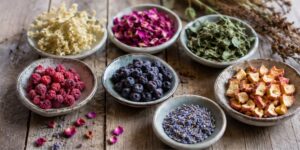
- 3 parts rose petals
- 2 parts apples (dried fruit)
- 2 parts blueberries ( dried)
- 2 parts raspberries (dried)
- 1 part lemon balm
A very fruity herbal tea that is especially refreshing when served well chilled with a few ice cubes.
The Evening Garden
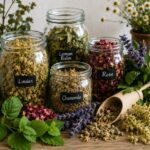
- 3 parts linden blossoms
- 3 parts lemon balm
- 2 parts rose petals
- 1 part lavender
- 1 part chamomile
A delicate blend, perfect for enjoying with a good book or simply savoring the quiet of the evening.
The Versatile Blend
- 3 parts lemon balm
- 2 parts mint
- 2 parts linden blossoms
- 2 parts rose petals
- 1 part chamomile
This is probably the one I’d give as a gift. Mild, fragrant, and well-balanced, it generally appeals to everyone.
Put it in a pretty glass jar with a little label instructing the recipient to steep about one tablespoon of the blend in a cup of simmering water for five to ten minutes.
Other herbs to discover for your herbal teas
If you enjoy creating your own blends, there are several other plants—grown or responsibly foraged in Quebec—that deserve a place in your garden or pantry: monarda, raspberry leaves, strawberry leaves, stinging nettles, elderflowers, rose hips (the fruit of rose bushes), blackcurrant leaves, lemon verbena, holy basil, a few young balsam fir needles, or even Labrador tea, harvested in moderation.
Use your herbs more often in your herbal teas
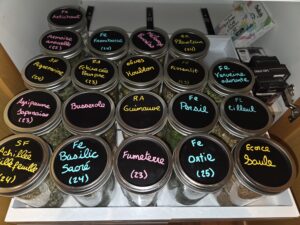
In everyday life, we’re often in a hurry. The secret to getting more out of your dried plants is often to make them easily accessible. At home, I’ve increased my use of them tenfold simply by freeing up two shelves in my cabinet that I’ve set aside for my dried herbs. I’ve even created a color-coding system so my partner knows which herbs are safe to eat without having to ask me.
How about creating your own recipe?
At the end of the day, there’s no better herbal tea than the one you’ve created yourself. Every garden is different, and so is every harvest. Some years, roses will be plentiful; other years, lemon balm or mint will take center stage.
So have fun! Experiment, jot down your favorite blends, and let your garden inspire you. You might be surprised to discover that your new favorite herbal tea was already hiding right there in your flower beds.